PLATFORM & PIPELINE
Transforming complex diagnostics into accessible point-of-care
PLATFORM & PIPELINE
Transforming complex diagnostics into accessible point-of-care
HOME DIAGNOSIS
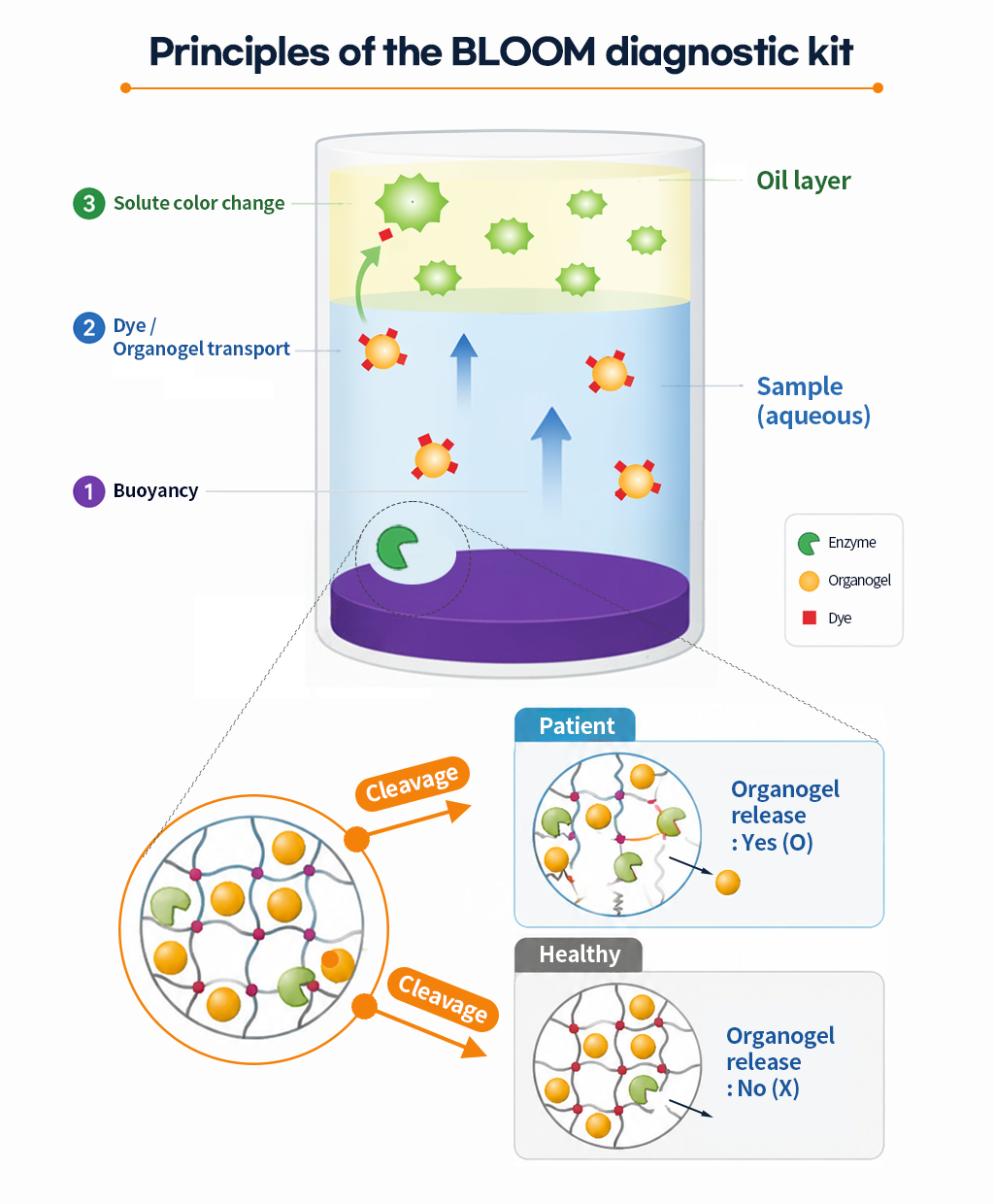
Home Diagnosis refers to a diagnostic approach in which users themselves test and monitor diseases or health conditions in a home environment, rather than at hospitals or specialized laboratories. Float Bio's BLOOM and Cut & Dip technologies enable highly sensitive diagnostics without complex clinical sample processing, making it easy to diagnose a wide range of diseases at home. Float Bio is committed to a future where every disease can be detected early — right at home.

Publication Info
Diagnosis of early-stage bladder cancer via unprocessed urine samples at the point of care
Abstract
A two-phase point-of-care diagnostic device for bladder cancer
Diagnostic kits for the optical detection of bladder cancer in urine can facilitate effective screening and surveillance. However, the heterogeneity of urine samples, owing to patients with bladder cancer often presenting with haematuria, interfere with the transduction of the optical signal. Here we describe the development and point-of-care performance of a device for the detection of bladder cancer that obviates the need for sample processing. The device leverages the enzymatic release of organogel particles carrying solvatochromic fluorophores in the presence of urinary hyaluronidases—a bladder cancer biomarker. Owing to buoyancy, the particles transfer from the urine sample into the organic phase, where the change in fluorescence can be measured via a smartphone without interference from blood proteins. In a double-blind study with 80 unprocessed urine samples from patients with bladder cancer (including samples with haematuria) or other genitourinary diseases and with 25 samples from healthy participants, our system distinguished the cancerous samples, including those with early-stage bladder cancer, with accuracies of about 90%. Obviating the need for sample pretreatment may facilitate the at-home detection of bladder cancer.